
At first glance, the choice seems obvious. Why pay for a platform when there are so many free tools available? Free video calls, free file sharing, free messaging apps. When instructors start searching for the best platform to conduct online classes, they usually compare features and prices. But online teaching is not a short-term activity.
Why Choosing the Right Platform for Online Classes Matters?

Choosing the right platform for online classes matters because teaching needs structure, not just access.
Free platforms are designed mainly for connection. They make communication fast and easy, which works well for casual use. But serious online classes reveal their limitations.
Most free tools:
- Treat your class more like a meeting than a real learning experience
- Offer almost no protection for your content
- Give very little information about how students are doing
- Require you to organize everything manually and follow up constantly
- Weren’t built to handle growth or bigger classes
Nothing usually breaks at first, which makes the issue subtle. But over time, the lack of structure affects how professional and scalable your teaching becomes.
Free vs Paid Platforms for Online Classes:

The difference between free and paid platforms isn’t just about money — it’s about staying organized versus doing everything manually.
Paid platforms aren’t just extra features. They actually make your life easier. They give you:
- Automatic student access
- All student data in one place
- All the tools you need in a single platform
- Reliable, stable technology
Free platforms might be “free,” but they cost you in other ways:
- You spend extra time managing students by hand
- You deal with technical problems yourself
- You can lose money because payment options are limited
- Juggling scattered tools adds stress
What looks free at first can end up costing a lot. Paid platforms save time, reduce stress, and make teaching much easier to manage.
When Free Platforms Make Sense?

Free platforms are not bad.
They are useful when:
- Testing a teaching idea
- Running small, informal sessions
- Teaching as a side experiment
- Learning the basics of online delivery
They lower the barrier to entry, and that matters.
The problem starts when instructors try to build something long-term on tools that were never designed for that purpose.
how to test the platform you choose?

When online teaching becomes serious, the right platform is essential , but how do you know it’s the one?
To test a platform effectively, focus on whether it meets the needs that matter most:
- Does it ensure predictable student experiences?
- Does it protect your content reliably?
- Can it handle growth beyond a small group?
- Are all your tools centralized and easy to use?
- Does it save you time rather than creating extra work?
- Are student analytics clear and actionable?
Many instructors think choosing a paid platform is about money. The real question is: “Can I afford to keep teaching without it?”
A proper test shows whether the platform truly supports professional, organized, and scalable teaching not just whether it has fancy features.
StorkyApp Best Platform to Conduct Online Classes:
The best platform to conduct online classes is not simply the most popular or the cheapest.
It’s the one that gives you structure, control, and room to grow.
It should protect your content, organize your students, centralize your tools, and support your long-term vision, not just help you start.
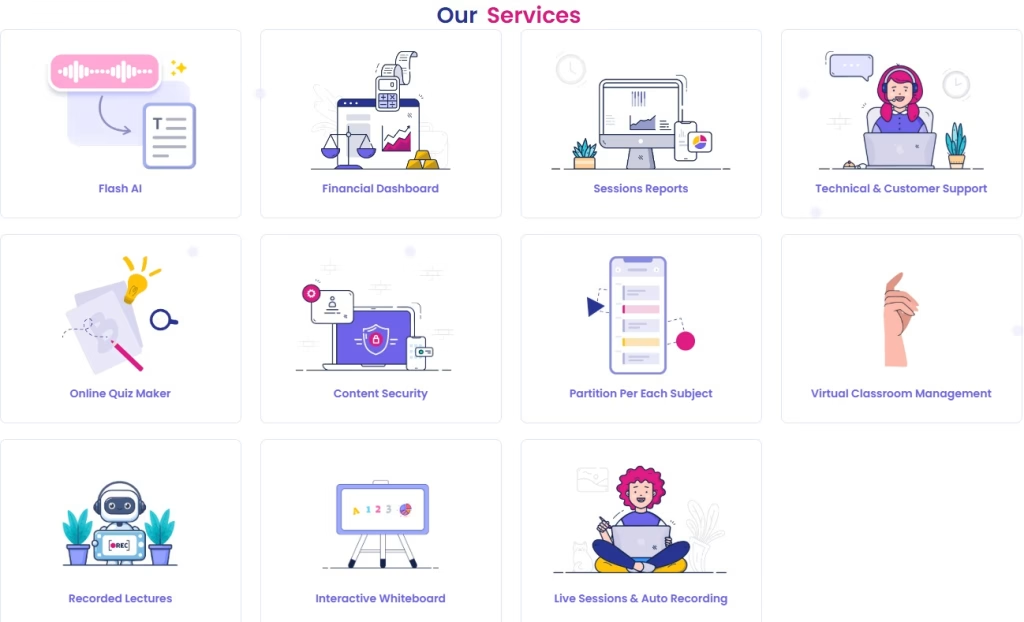
StorkyApp brings everything together in one place ,content protection, student management, monetization tools, and reliable technology built for serious online education.
For a platform that does all this effortlessly, StorkyApp is the smart choice…try it now
FAQ:
1- Are free platforms enough for online classes?
They are suitable for small or experimental sessions, but they lack structure and scalability for long-term teaching.
2- When should I switch to a paid platform?
When manual management becomes overwhelming or when you plan to grow beyond a small group.
3- Is investing in a paid platform necessary?
If online teaching is a serious project or business, the time saved and improved organization typically justify the investment.
4- What matters most when choosing a platform?
Structure, reliability, content protection, and the ability to grow without operational stress.